If you are thinking about taking a dietary supplement, then this NIH sponsored site is a good place to learn some of the facts about each supplement. It grades the strength of the scientific evidence for each of the reported uses. There is also a good review of the safety profile, dosing and history of each item.
Although herbs and supplements are often touted as being natural, they should be considered to be just another medication. Anything that is ingested and which is absorbed systemically may have side effects or contraindications. In addition dietary supplements do not require FDA approval. In 1994 a law was passed that classified supplements as food. Here is a list of drugs found in some dietary supplements - lovastatin, estrogen, alprazolam, indomethacin, warfarin, and sidenafil (Viagra).
Always inform your doctor about any herbs, supplements, or concoctions that you are taking. That garlic pill that you are taking may increase your risk of bleeding after surgery or dental procedure, and the aristocholic acid in a Chinese herbal weight loss product may cause kidney failure and cancer (Med lett Drugs Ther 2002;44:84).
Showing posts with label Alternative Medicine. Show all posts
Showing posts with label Alternative Medicine. Show all posts
Tuesday, April 08, 2008


Sunday, August 19, 2007
Red Yeast Rice - Is It Safe?

Red yeast rice is a supplement that is used to reduce cholesterol. It is effective because it contains "Monacolin K" a potent inhibitor of HMG-CoA reductase, also known as Lovastatin (Mevacor®, a drug produced by Merck & Co., Inc). It has been used in China since 800 AD.
There has been some dispute as to whether red yeast rice should be classified as a supplement or as a drug. Recently the FDA recommended to "avoid using" the products because they "may contain an unauthorized drug that could be harmful to their health."
However, with careful monitoring the risk of taking this medication should be low. To reduce the risk of liver and muscle injury which are two of the common side effects, patients should inform their physicians that they are using this supplement. A routine blood test can be done to monitor for any evidence of injury. Patients who are already on a cholesterol reducing medication should be aware that taking this supplement may increase their risk of side effects.
References: please see links.
Photo: courtesy of Solaray.
Thursday, September 21, 2006
Supplements for Knee Pain
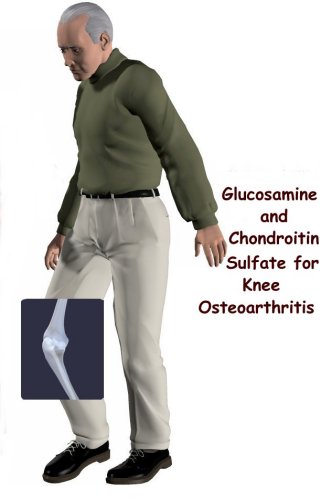 Glucosamine and chondroitin are two of the most popular supplements that are used for osteoarthritis and knee pain. Annual sales is estimated to be near $700 million, but do these supplements really work?
The evidence is a mixed bag of results. Some studies have shown that 3 years of therapy with glucosamine slowed progression of osteoarthritis as seen on xrays. The GAIT study showed that no benefit was seen in patients with mild pain, but that the pain was reduced significantly in patients who had moderate to severe pain and who received a combination of glucosamine plus chondroitin. (I received many phone calls from patients wanting to know if they shoud continue their supplements after the results of this study came out because it was not clear in the news reports that some patients did indeed benefit). Finally in a new study presented at the 10th World Congress of the Osteoarthritis Research Study it was concluded that 1500-mg daily dose of glucosamine relieved pain significantly better than a daily 3000 mg dose of acetominophen (Tylenol).
Bottom line is that since it is difficult to predict which patients will benefit from these supplements and since there is data to support their efficacy as well as their low side effect profile then it may be reasonable to consider a 3 to 6 months trial of a combination of these supplements in addition to exercise and physical therapy. If symptoms improve then consider continuing the supplements otherwise it may not be indicated to take them.
To read this in Farsi, click here.
References: please see specific links.
Photo: courtesy of eorthpod.com
Monday, August 21, 2006
Does Acupuncture Help Osteoarthrits Knee Pain ?
This question was asked by the German social health care insurance organizations (www.gerac.de) to see if they should pay for the cost of acupuncture. Four German universities joined a study to evaluate 1007 patients with knee pain due to osteoarthritis.
The patients were divided into 3 groups. Each group was assigned to receive 10 sessions of the following:
1: Traditional Chinese acupuncture (real acupuncture) in which needles were placed according to protocol.
2: Sham (fake) acupuncture.
3: Doctor visits with out any acupuncture.
After 26 weeks of treatment the patients in both the real and the sham acupuncture groups had greater improvement in the pain level than those who went to the doctor's offices. However, an interesting and unexpected finding was that there was no difference in the level of pain reduction between the sham and the real acupuncture treatments.
So how can these results be explained? Is it that feeling like you're going to get special treatment makes you feel bettter? Is it that patients in the acupuncture groups have more direct and prolonged time with the health care worker? Or is it that inserting needles in the skin helps no matter where they are placed?
The study concluded that patients who received acupuncture (real or sham) had less pain than those who recieved medical management alone. However, the reason remains unclear since there was no difference between real acupuncture and fake acupuncture. It was recommended that the German insurance organizations cover the acupuncture treatments.
For more on effects of acupuncture see Acupuncutre, Will It Work For You. National Center for Complementary and Alternative Medicine.
References: please see specifc links.
To read this in Farsi, click here.
Sunday, August 06, 2006
Fish Oil Capsules

Fish is probably not found on too many people's lists of their all time favorite foods. For this reason and also due to the concern of possible mercury contamination in fish, often fish oil capsules are substituted as a source of the omega-3 fatty acids in the diet. Here's what you should know about these supplements.
How much is recommended? The main nutrients in the supplements are EPA (eicosapentaeonic acid) and DHA (docosahexaenoic acid). To keep it simple we'll focus on the EPA. Look at your bottle's ingredients and see how much EPA (eicosapentaeonic acid) is contained in each pill. The recommendations are to take 1200 mg EPA per day.
Is any specific brand recommended more highly? Omacor is the only fish oil supplement approved by the FDA. It contains 465 mg EPA per pill. The USP (U.S. Pharmacopeia) -verified fish oil supplements such as Kirkland or Nature Made contain about 180 mg EPA per pill. Omacor is more expensive than the other supplements. There has not been any evidence of contamination with mercury in these products.
What is the benefit of omega-3 supplements? Recent studies have shown that these supplements can decrease the triglyceride level, and decrease the risk of major coronary events especially in those who are recovering from a recent heart attack. There have also been some reports which indicate the supplements may have a benefit in autoimmune diseases such as rheumatoid arthirits and psoriasis, and possibly even in depression. Although the data for the latter conditions is limited.
Are there any side effects? There has been some concern that they may trigger abnormal heart rhythyms in patients with chronic coronary disease. Other side effects include burping and indigestion, and a bad after taste. In large doses, bleeding time may be prolonged, but this has not shown to be of any clinical significance.
Does taking fish oil capsules reduce the chances of developing heart disease in an otherwise healthy person? Although eating fatty fish may be beneficial, there has been no evidence to show that a healthy person with out any of the above mentioned conditions may benefit from taking the supplements.
Reference: The Medical Letter, Volume 48, July 17, 2006. Please see links for specific references.
Photo: courtesy of dyslexia-parent.
Tuesday, May 23, 2006
Acupuncture, Will It Work For You

Acupuncture has been around for thousands of years. It has gained acceptance and popularity in the West over the last 10-20 years, but do we know if it works?
Several studies have been completed, and the bottomline, according to The Medical Letter, May 8 2006 issue, is that acupuncture may be effective when used as an adjunct but not alone in the treatment of the following:
- chemotherapy-induced nausea and vomiting
- cancer pain
- low back pain
- osteoarthritis of the knee
- headaches
Conditions which were studied but for which acupuncture did NOT show any benefit were:
- smoking /addiction
- weight loss
- depression
- neurologic disorders including stroke
For details of these studies or more general information on acupuncture see National Center for Complementary and Alternative Medicine.
Image: courtesy of LiewCf.com
Subscribe to:
Posts (Atom)