One last thing on the flu. In a follow up to the previous post, our pediatric consultant, Dr. Janesta Noland, would like you to know that there is a new recommendation for flu vaccine for children.
The Advisory Committee on Immunization Practices (ACIP) unanimously voted at its winter meeting to expand recommendations for flu vaccinations to include children age 5-18 years. Previously, the vaccine was recommended for all children ages 6 months to 5 years as well as children of any age with high risk conditions such as asthma, cardiac disease or diabetes. Although the vote was unanimous, the decision about when it should go into effect was not. If practitioners were to implement the recommendation in the 2008-2009 influenza season, supplies of vaccine would likely be inadequate.
In the very youngest - children aged 6 to 23 months - vaccination prevents hospitalization in 74% of those who are fully immunized. (Of note, in children who do not receive the second dose of the vaccine, hospitalization is prevented in only 39%.) Although death or hospitalization is much less likely in healthy school-age children compared to younger children or children with high-risk conditions, 10-30% of children are afflicted with influenza illnesses annually which results in a large number of missed school days. And 5-7% of those aged 5-18 years visit the doctor for influenza each year and many receive antibiotics unnecessarily.
For parents to decide whether to vaccinate their children for influenza, they must weigh the likelihood of being infected with influenza, the predicted efficacy of the vaccine, risk of side effects of the vaccine, and the risk of going to the doctor, receiving antibiotics or missing school, or having more serious complications of flu resulting in hospitalization or death.
What About Thimerosal in Vaccines?
Thimerosal (a mercury-containing preservative) has been removed from nearly all pediatric vaccines because of concerns about a possible relationship between mercury and autism. These concerns could be the subject for a 12-volume dissertation so we will leave that for another discussion. It should be noted, however, that the current ACIP recommendations are that all children less than 36 months should receive thimerosal-free vaccine when supplies are adequate. Many pediatricians provide preservative-free vaccine exclusively, even for children older than 3 years. Ask your child’s doctor.
Showing posts with label Infections. Show all posts
Showing posts with label Infections. Show all posts
Sunday, April 27, 2008


Tuesday, April 22, 2008
Flu Season Update
This year's flu season has been the worst one that we have had in 4 years. The flu cases peaked in mid-February, but they continue to be reported throughout the states. According to the MMWR, this season " Pneumonia and influenza was listed as an underlying or contributing cause of death for 8.9% of all deaths reported for the week ending April 5, 2008. This percentage was above the epidemic threshold of 6.9% and marked the thirteenth consecutive week that the proportion of all deaths attributed to pneumonia and influenza was above the epidemic threshold."
The severity of this year's flu season is attributed to the decreased efficacy of the vaccine. The vaccine did not match some of the most virulent strains which were circulating this year. It was only 44% effective instead of the usual 70-90% effective. However, even at its lowest matching rate, the vaccine still offers some protection. Of the 67 children who died this year of the flu, more than 40 were not vaccinated.
References: please see links.
The severity of this year's flu season is attributed to the decreased efficacy of the vaccine. The vaccine did not match some of the most virulent strains which were circulating this year. It was only 44% effective instead of the usual 70-90% effective. However, even at its lowest matching rate, the vaccine still offers some protection. Of the 67 children who died this year of the flu, more than 40 were not vaccinated.
References: please see links.
Tuesday, April 01, 2008
Fever Is Your Friend
Dr. Janesta Noland, one of the premiere pediatricians in the bay area, has agreed to share her expertise with us and to answer some of your questions on children's health issues.
Many parents fear that fever represents something dangerous happening in their child’s body. Could the child have a dangerous infection? Could the fever itself cause damage?
First, let’s talk about fever – what it is and what causes it. A fever is defined as temperature of 100.4F (38C) or greater taken rectally, 99.5F (37.5C) taken orally, or 99F (37.2C) taken under the arm. Fever happens when the body’s thermostat increases its set point. (Of note, children may sometimes develop increased body temperature when playing, but this is not fever because the set point is not elevated and the body will respond appropriately to return the temperature to normal.) Body temperature is controlled in the brain in a structure called the hypothalamus. Certain cytokines (cell activators) stimulate the hypothalamus to increase body temperature by increasing heat production via shivering or increased muscle tone and by preventing heat loss via constriction of blood vessels. External factors such as some parts of bacteria also act on the body to trigger fever.
Why does fever happen? Is it a disease? Fever was first identified as a symptom rather than a disease by a German physician in the 1800s. Fever is thought to make the body a more inhospitable place for invading organisms, some of which have strict temperature preferences. Fever also increases the effectiveness of white blood cells at fighting infection: they move more effectively, remove offending organisms more effectively and are less sensitive to toxic effects of invading organisms. Thus, fever may actually be desirable in helping rid the body of infection! Fever can be dangerous at extremely high temperatures, over 107F, but the primary downsides of fever are increased need for fluid and general discomfort. In young children (under 5 years), febrile seizures occasionally occur. Although frightening, these are not dangerous.
How can a parent know when to treat a child’s fever, or when to call a pediatrician? Here are general guidelines:
1) Any fever in an infant less than 8 weeks old should be brought to the attention of your pediatrician immediately.
2) Call your pediatrician if your child acts very ill, is not arousable, has a stiff neck or will not drink.
3) Signs of fever associated with a bacterial infection include stiff neck, pain on urination, or cough together with decreased energy. See your pediatrician if any of these signs occur.
4) Since both bacteria and viruses can cause fever, and since viruses are much more common, it is OK to observe your child if she is well-appearing when her temperature is down and is able to take in liquids. However, if the fever lasts more than 4 or 5 days (at which point most fevers caused by viruses go away), or if fever recurs after going away for a day or two, see your pediatrician to evaluate for a possible secondary bacterial infection.
5) If your child has a febrile seizure, call your pediatrician.
References: please see above links.
Many parents fear that fever represents something dangerous happening in their child’s body. Could the child have a dangerous infection? Could the fever itself cause damage?
First, let’s talk about fever – what it is and what causes it. A fever is defined as temperature of 100.4F (38C) or greater taken rectally, 99.5F (37.5C) taken orally, or 99F (37.2C) taken under the arm. Fever happens when the body’s thermostat increases its set point. (Of note, children may sometimes develop increased body temperature when playing, but this is not fever because the set point is not elevated and the body will respond appropriately to return the temperature to normal.) Body temperature is controlled in the brain in a structure called the hypothalamus. Certain cytokines (cell activators) stimulate the hypothalamus to increase body temperature by increasing heat production via shivering or increased muscle tone and by preventing heat loss via constriction of blood vessels. External factors such as some parts of bacteria also act on the body to trigger fever.

Why does fever happen? Is it a disease? Fever was first identified as a symptom rather than a disease by a German physician in the 1800s. Fever is thought to make the body a more inhospitable place for invading organisms, some of which have strict temperature preferences. Fever also increases the effectiveness of white blood cells at fighting infection: they move more effectively, remove offending organisms more effectively and are less sensitive to toxic effects of invading organisms. Thus, fever may actually be desirable in helping rid the body of infection! Fever can be dangerous at extremely high temperatures, over 107F, but the primary downsides of fever are increased need for fluid and general discomfort. In young children (under 5 years), febrile seizures occasionally occur. Although frightening, these are not dangerous.
How can a parent know when to treat a child’s fever, or when to call a pediatrician? Here are general guidelines:
1) Any fever in an infant less than 8 weeks old should be brought to the attention of your pediatrician immediately.
2) Call your pediatrician if your child acts very ill, is not arousable, has a stiff neck or will not drink.
3) Signs of fever associated with a bacterial infection include stiff neck, pain on urination, or cough together with decreased energy. See your pediatrician if any of these signs occur.
4) Since both bacteria and viruses can cause fever, and since viruses are much more common, it is OK to observe your child if she is well-appearing when her temperature is down and is able to take in liquids. However, if the fever lasts more than 4 or 5 days (at which point most fevers caused by viruses go away), or if fever recurs after going away for a day or two, see your pediatrician to evaluate for a possible secondary bacterial infection.
5) If your child has a febrile seizure, call your pediatrician.
References: please see above links.
Wednesday, February 13, 2008
Pink Eye
 Pink eye is a common infection of the surface skin, or conjunctiva, of the eye. It is similar to a “cold” of the eye, and is known as acute conjunctivitis. Conjunctivitis is just a medical term that means inflammation of the conjunctiva. Many things can cause conjunctivitis, most commonly an allergy or infection. Pink eye is a form of acute conjunctivitis that is usually caused by a virus.
It is very contagious and is spread by direct contact. For example, a person who has pink eye who has rubbed his eyes and used that hand to open a door could end up infecting someone else who touches that door. This is why it is encouraged that people who are diagnosed with pink eye should stay home until the infection has resolved.
Pink eye is associated with characteristic symptoms: redness, swelling, itching, burning, and crusting of the eyelashes when waking up from sleep. There may be discharge from the eye, which is typically clear. A lot of yellow discharge is a sign of bacterial infection. The eye may be watery and sensitive to light.
The degree of symptoms varies from minimal redness and irritation to severe swelling, discharge, and decreased vision. Usually one eye is involved before the other, and within days both are affected. In adults, involvement of only one eye is more common since we tend to avoid spreading it to the other side. The conjunctivitis may be preceded by an upper respiratory infection with fever, congestion, and swollen nodes. Fortunately, the common viral form of pink eye is self-limited, lasting one to two weeks. In some cases, however, small white spots develop on the cornea and may cause decreased vision, which can last for months.
Treatment of viral pink eye is mainly supportive and is aimed at relieving the symptoms. Over-the-counter antihistamine drops such as Naphcon A, Vasocon A, and Opcon, help reduce the itching and redness. Cold compresses reduce the swelling and soothe the eye. Warm compresses in the morning are used to remove the crusting from the lashes. In children, contact lens wearers, and anyone with corneal involvement, an antibiotic drop or ointment should be used to prevent a bacterial superinfection.
If there are signs of a bacterial conjunctivitis, such as colored discharge, severe inflammation, or no improvement with treatment, antibiotics must be used. For borderline cases a culture may be helpful. If corneal opacities are present, your eye doctor may recommend a course of steroid eye drops. Contact lenses must not be worn until the infection is completely resolved. In addition, contact precautions minimize the chance of spreading the infection to the other eye and to other people (ie, hand washing, no eye rubbing, no sharing of face towels or pillow cases, etc.).
Consultant: Dr. Neil Friedman.
Monday, February 11, 2008
The Flu Has Arrived
The flu virus is now among us. It has arrived late but it has hit hard. A higher than average number of cases has been reported throughout the country. Part of the reason for the increase in this number may be that a new strain of flu virus has emerged during this season.
The vaccine is designed to protect against three influenza strains. According to the CDC, 30 percent of the overall strains of influenza in the United States may be a strain that emerged in Australia called H3N2 A/Brisbane. It emerged too late to be included in the flu vaccine offered in the United States. However, the vaccine may help reduce the complications as well as the severity of the illness if exposed to the new virus. It is still not too late to receive the flu shot.
The flu infects about 20 percent of the population, causes the hospitalization of 200,000 people and kills 36,000 each year. Typical flu symptoms include a high fever of 101 to 103 F (38-39 C), body aches, extreme fatigue, sore throat, congestion and some gastrointestinal issues. The symptoms may last 5-10 days and are much more severe than cold symptoms. See here to assess if you have the flu. Please do not come into work if you have a fever or if you think you have the flu. Stay at home and rest.
Over-the-counter medications, such as acetaminophen (Tylenol) or ibuprofen (Advil, Motrin) may help make you more comfortable. Children and adolescents should avoid taking aspirin. Decongestants such as pseudophedrine (Sudafed) and antihistamines such as diphenhydramine (Benadryl) or loratidine (Claritin) may help reduce congestion and runny nose.
Flu symptoms usually resolve spontaneously. There should be a general improvement by day 5. You should consult your physician if the symptoms get worse after one week or if any new symptoms such as a severe ear pain, cough, or shortness of breath develop.
References: please see above links.
The vaccine is designed to protect against three influenza strains. According to the CDC, 30 percent of the overall strains of influenza in the United States may be a strain that emerged in Australia called H3N2 A/Brisbane. It emerged too late to be included in the flu vaccine offered in the United States. However, the vaccine may help reduce the complications as well as the severity of the illness if exposed to the new virus. It is still not too late to receive the flu shot.
The flu infects about 20 percent of the population, causes the hospitalization of 200,000 people and kills 36,000 each year. Typical flu symptoms include a high fever of 101 to 103 F (38-39 C), body aches, extreme fatigue, sore throat, congestion and some gastrointestinal issues. The symptoms may last 5-10 days and are much more severe than cold symptoms. See here to assess if you have the flu. Please do not come into work if you have a fever or if you think you have the flu. Stay at home and rest.
Over-the-counter medications, such as acetaminophen (Tylenol) or ibuprofen (Advil, Motrin) may help make you more comfortable. Children and adolescents should avoid taking aspirin. Decongestants such as pseudophedrine (Sudafed) and antihistamines such as diphenhydramine (Benadryl) or loratidine (Claritin) may help reduce congestion and runny nose.
Flu symptoms usually resolve spontaneously. There should be a general improvement by day 5. You should consult your physician if the symptoms get worse after one week or if any new symptoms such as a severe ear pain, cough, or shortness of breath develop.
References: please see above links.
Wednesday, October 24, 2007
What's MRSA And What Can Be Done About It?
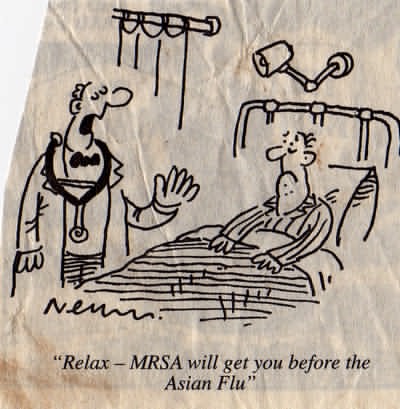
I have received many questions regarding MRSA. There has been an increasing number of reports in the press lately about the potential dangers of this particular infection which has been labeled as an epidemic.
MRSA stands for methicillin-resistant Staphylococcus aureus bacteria. It is only one of the superbugs that have emerged over the last several years. Methicillin is a penicillin type antibiotic. Decades ago, a strain of staph (staphylococcus) that was resistant to the more powerful antibiotics emerged in hospitals and was dubbed MRSA.
In 1990's a strain of MRSA was detected in the wider community which was distinct from the clones found in the hospitals. This is now called community-acquired MRSA (CA-MRSA) as opposed to the hospital-acquired MRSA (HA-MRSA). Prevalence and incidence of CA-MRSA has been increasing. USA300 is the predominant clone of MRSA and may be more transmissible. It is the major source of this infection in US, Europe, and Canada, and reports suggest that it has increased virulence.
Staph bacteria are normally found on the skin or in the nose of about one-third of the population. These people who are colonized by staph or MRSA can pass the bacteria to others through direct contact. If the bacteria enter the body through a cut or other broken skin then they can cause more serious illnesses in some people. The infection generally starts as small red bumps that look like pimples or spider bites. These can then quickly become deep painful abscesses. Occasionally they may also go beyond the skin and soft tissues, invading ear, lung, bloodstream, joints, and heart valves.


The infection can be diagnosed by obtaining a culture of the wound. This is an important step because certain antibiotics which are normally used for non-MRSA skin infections such as cephelasporins (keflex) but which are the wrong antibiotics for MRSA may actually turn on the virulence factor and worsen the outcome of the MRSA infection. According to the New England Journal of Medicine 57% of MRSA infections were treated with the wrong antibiotics.
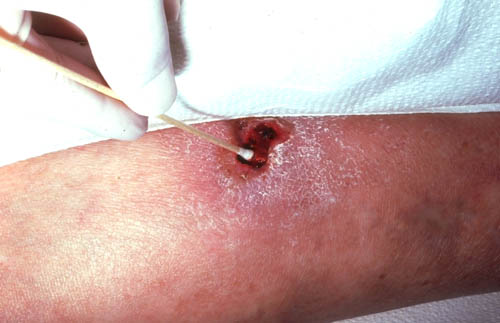
Once diagnosed, a simple incision and drainage of the lesion may be all that is needed to cure it. Antibiotics that have been shown to still be effective include clindamycin, trimethoprim/sulfamethoxazole, tetracycline, rifampin, and vancomycin.
The best way to prevent the infection is to wash your hands. Other preventive measures according to the CDC include keeping cuts and scrapes covered by bandages, avoiding using others' personal items such as towels and razors, and wiping surfaces of equipment at gyms or athletic departments before and after use.
References: please see above links.
Image courtesy of whaletobird.
Monday, October 22, 2007
Superbugs Are Superhackers

Superbugs are no heroes. They are bacteria which have learned to decipher how to resist the antibiotic's effects. These bugs which previously had only one mechanism for fighting off an antibiotic have now developed multiple mechanisms for resistance. These mechanisms include developing cell walls that don't allow the antibiotic to penetrate the bacteria, pumps that quickly push out the antibiotic from the cell, and enzymes that deactivate the antibiotic. Superbugs can also exchange their survival information with other bacteria.
These bugs have been emerging for many years, and the movement has been spreading in the US and globally. Initially they were first noted in hospitals but now they have reached the community and have been detected in workplaces, gyms, and schools. Antibiotic overuse as well as misuse has been a major contributor to the emergence of these organisms. Some of these bacteria which have become more of a concern include methicillin-resistant staph aureus (MRSA), clostridium difficile (C. diff) , and gonorrhea.
Please keep these recommendations from the Mayo Clinic in mind to curb the expansion of this growing problem.
Understand when antibiotics should be used.
Don't expect to take antibiotics every time you're sick. Antibiotics are effective in treating most bacterial infections, but they're not useful against viral infections, such as colds or the flu. Each year in the United States, doctors write an estimated 50 million antibiotic prescriptions for viral illnesses for which antibiotics offer no benefit. And even some common bacterial ailments, such as bronchitis, don't respond well to antibiotics.
Take antibiotics exactly as prescribed.
Follow your doctor's instructions when taking prescribed medication, including how many times a day and for how long. Avoid stopping treatment a few days early if you start feeling better — a complete course of antibiotics is needed to kill all of the harmful bacteria. A shortened course of antibiotics, on the other hand, often wipes out only the most vulnerable bacteria, while allowing relatively resistant bacteria to survive.
Never take antibiotics without a prescription.
If you didn't complete a full course of antibiotics, you might be tempted to use the leftover medication the next time you get sick or to pass it along to someone else. But this is never a good idea. For one thing, the antibiotic might not be appropriate for your own or another person's illness. And even if it is, you're not likely to have enough pills to combat the germs making you sick, which can lead to more resistant bacteria.
Don't pressure your doctor for antibiotics if you have a viral illness.
Instead, talk with your doctor about ways to relieve the symptoms of your viral illness — a saline nasal spray to clear a stuffy nose, for instance, or a mixture of warm water, lemon and honey to temporarily soothe a sore throat.
Protect yourself from infection in the first place.
You can keep many germs at bay by adopting preventive habits, such as washing your hands thoroughly and often, handling and preparing food safely, and keeping up-to-date on immunizations.
Image courtesy of: invertebrates and microbes.

Tuesday, October 16, 2007
Say Ahhhh

 Sore throat (pharyngitis) is one of the top 10 reasons that patients visit doctors. Most of these patients are concerned about having developed strep throat. 70% of these patients get antibiotics. However, not all sore throats are strep throat. In fact only 5-15% of sore throats in adults are due to streptococcus pharyngitis.
The most common cause of sore throats are viruses especially the rhinovirus. Other viruses include coronavirus, influenza, adenovirus, herpes simples virus and less commonly the Epstein-Barr-virus associated mononucleosis. Antibiotics are not effective for viral pharyngitis.

Other causes include allergies, smoking, coughing or yelling excessively, gastroesophogeal reflux (heartburn), or low humidity.
However, it is important to detect the presence of strep pharyngitis because untreated strep may lead to complications such as rheumatic fever, acute glomerulonephritis (a type of kidney disease), peritonsillar abscess, and meningitis. It has even been associated in children with development of obsessive compulsive disorder or Tourette syndrome.

The gold standard of detecting strep group A is the throat culture. To avoid the 24-48 hour delay that occurs with standard throat cultures, a rapid strep test may be done. The sensitivity of this test is slightly lower than the throat culture.
Other clinical criteria besides the throat culture which may be used to determine if you have strep throat and therefore need treatment is the presence of 2 or more of the following:
- tonsillar exudates (pus or white film) in the back of the throat
- tender, enlarged, anterior, cervical nodes (glands in the neck)
- absence of cough
- fever
- positive rapid strep antigen test
If none or only one of these criteria is present, then antibiotics are not recommended. Over the counter medications which may help soothe the sore throat include lozenges or cough drops, acetominophen (Tylenol) or ibuprofen (Advil/Motrin) , decongestants and antihistamines for congestion, and of course rest and fluids and minimizing talking.
Tuesday, October 09, 2007
Chicken Pox
What is chicken pox?
Chicken pox is a highly contagious disease that is caused by the varicella virus, a member of the herpes virus family. In temperate climates, chickenpox occurs most frequently in winter and early spring. It is common in the United States and worldwide. Virtually everyone who is not vaccinated acquires chickenpox by adulthood. The disease is usually more severe if acquired as an adult.
How is chicken pox transmitted?
Chicken pox is spread easily to others by direct person-to-person contact, by droplet or airborne spread of discharges from an infected person's nose and throat or indirectly by contact with articles freshly soiled by discharges from the infected person's lesions. The scabs themselves are not considered infectious.
How long can a person be contagious?
An infected person is most contagious from one to two days before the onset of rash until all lesions have crusted. People who are immunocompromised may be contagious for a longer period of time. The symptoms may appear any time between 10-21 days (but usually 14-16 days) after exposure to someone with chickenpox.
What are the symptoms of chicken pox?
Initial symptoms include sudden onset of mild fever and feeling tired and weak. These are soon followed by an itchy blister-like rash which appear in 3 or more successive waves. The blisters tend to be more common on covered than on exposed parts of the body. They may appear on the scalp, armpits, trunk and even on the eyelids and in the mouth. The blisters eventually dry, crust over and form scabs by 2-3 weeks from the onset of disease
Are there any complications to getting the disease?
Rarely the condition may be fatal particularly when it occurs in adults or persons with impaired immunity. The varicella virus can cause viral pneumonia and encephalitis (infection of the brain). A more common complication is infection of the blisters if they are scratched.
Once the virus invades the body, it lives in a sensory nerve ending quietly. However, under certain circumstances the virus can reactivate and multiply causing a severe blistering painful rash called shingles. The pain known as postherpetic neuralgia can last months to even years.
Also aspirin or aspirin containing products should never be given if chicken pox is suspected in children. It has been associated with a serious illness called Reyes Syndrome which can affect the liver and the brain and cause death.
Why is chickenpox a concern during pregnancy?
Most pregnant women are immune and are not at high risk. However a non-immune pregnant woman is at risk for chicken pox pneumonia which may occur in 10% of the cases and which can be life threatening.
If the exposure occurs during the first half of the pregnancy then there is a higher risk for birth defects to the child. This condition is characterized by skin scarring, malformed limbs, an abnormally small head, vision or hearing problems, and motor or mental developmental disabilities.
If the exposure occurs toward the end of pregnancy, between five days before giving birth, or two days after delivery, then the baby has a 30 to 40 percent chance of developing what's called neonatal varicella which can be life threatening, especially if left untreated. Fortunately, the risk of a severe case can be reduced if the baby is given a shot of varicella zoster immune globulin (VZIG), a blood product that contains chicken pox antibodies.
Does a past infection with chicken pox protect you from getting the disease again?
Chickenpox generally results in lifelong immunity. However, this infection may remain hidden and recur years later as shingles in a proportion of older adults and sometimes in children.
How can immunity be checked?
A simple blood test can be done to check the level of the antibodies present. The test may cost about $100.00 and it may not be covered by insurance.
What are the recommendations for the chicken pox vaccine?
The Advisory Committee on Immunization Practices (ACIP) recommends vaccination for chicken pox. For children under 13 years, two doses of vaccine are recommended. The first dose should be administered at 12 – 15 months of age and the second dose at 4 – 6 years of age. A second dose of catch-up varicella vaccination is recommended for children, adolescents, and adults who previously had received one dose. For anyone 13 years or older who has not had the disease, two doses of vaccine are recommended at an interval of 4-8 weeks. In case of uncertainty, prior varicella disease is not a contraindication to varicella vaccination.
Individuals who should not get the varicella vaccine include children with leukemia or other cancers, people whose immune systems may be weakened due to disease or medications, people taking high doses of steroid medications, pregnant women, and infants younger than 1 year.
How effective is the vaccine?
The vaccine is about 80% effective after the first dose and 99% effective after the second dose. Vaccine-induced immunity is believed to be long lasting.
Since the vaccine is not 100% effective, a modified varicella, known as breakthrough disease, can occur in some vaccinated persons. Breakthrough disease is most commonly (~ 70% - 80% of cases) mild, with fewer than 50 skin lesions, no fever and shorter duration of rash. . The breakthrough varicella is contagious and cases should be isolated for as long as lesions persist.
Administration of the vaccine to individuals within 72 hours of the disease may prevent or significantly reduce the severity of the disease.
What are the side effects of the vaccine?
The most common side effects are injection site complaints such as pain, soreness, redness, and swelling. A localized rash may also occur at that site. A generalized rash with a small number of lesions may rarely occur, within 3 weeks of vaccination. Fever may occur in 10-15% of the patients.
Varicella vaccine is a live-virus vaccine and results in a latent infection similar to that caused by wild varicella virus. Consequently, shingles caused by the vaccine virus has been reported. This appears to occur at a lower rate than following natural infection.
Women who have received the vaccine should not become pregnant for one month after the vaccination.
Can chicken pox be treated?
Acycolvir and other antiviral medications have been used to treat some individuals. In general they are not recommended for treating children since the disease is milder in children.
Oatmeal baths can help relieve itching.
Acetaminophen can be used to treat fever.
Chicken pox is a highly contagious disease that is caused by the varicella virus, a member of the herpes virus family. In temperate climates, chickenpox occurs most frequently in winter and early spring. It is common in the United States and worldwide. Virtually everyone who is not vaccinated acquires chickenpox by adulthood. The disease is usually more severe if acquired as an adult.
.jpg)
How is chicken pox transmitted?
Chicken pox is spread easily to others by direct person-to-person contact, by droplet or airborne spread of discharges from an infected person's nose and throat or indirectly by contact with articles freshly soiled by discharges from the infected person's lesions. The scabs themselves are not considered infectious.


How long can a person be contagious?
An infected person is most contagious from one to two days before the onset of rash until all lesions have crusted. People who are immunocompromised may be contagious for a longer period of time. The symptoms may appear any time between 10-21 days (but usually 14-16 days) after exposure to someone with chickenpox.
What are the symptoms of chicken pox?
Initial symptoms include sudden onset of mild fever and feeling tired and weak. These are soon followed by an itchy blister-like rash which appear in 3 or more successive waves. The blisters tend to be more common on covered than on exposed parts of the body. They may appear on the scalp, armpits, trunk and even on the eyelids and in the mouth. The blisters eventually dry, crust over and form scabs by 2-3 weeks from the onset of disease


Are there any complications to getting the disease?
Rarely the condition may be fatal particularly when it occurs in adults or persons with impaired immunity. The varicella virus can cause viral pneumonia and encephalitis (infection of the brain). A more common complication is infection of the blisters if they are scratched.

Once the virus invades the body, it lives in a sensory nerve ending quietly. However, under certain circumstances the virus can reactivate and multiply causing a severe blistering painful rash called shingles. The pain known as postherpetic neuralgia can last months to even years.


Also aspirin or aspirin containing products should never be given if chicken pox is suspected in children. It has been associated with a serious illness called Reyes Syndrome which can affect the liver and the brain and cause death.
Why is chickenpox a concern during pregnancy?
Most pregnant women are immune and are not at high risk. However a non-immune pregnant woman is at risk for chicken pox pneumonia which may occur in 10% of the cases and which can be life threatening.
If the exposure occurs during the first half of the pregnancy then there is a higher risk for birth defects to the child. This condition is characterized by skin scarring, malformed limbs, an abnormally small head, vision or hearing problems, and motor or mental developmental disabilities.

If the exposure occurs toward the end of pregnancy, between five days before giving birth, or two days after delivery, then the baby has a 30 to 40 percent chance of developing what's called neonatal varicella which can be life threatening, especially if left untreated. Fortunately, the risk of a severe case can be reduced if the baby is given a shot of varicella zoster immune globulin (VZIG), a blood product that contains chicken pox antibodies.
Does a past infection with chicken pox protect you from getting the disease again?
Chickenpox generally results in lifelong immunity. However, this infection may remain hidden and recur years later as shingles in a proportion of older adults and sometimes in children.
How can immunity be checked?
A simple blood test can be done to check the level of the antibodies present. The test may cost about $100.00 and it may not be covered by insurance.
What are the recommendations for the chicken pox vaccine?
The Advisory Committee on Immunization Practices (ACIP) recommends vaccination for chicken pox. For children under 13 years, two doses of vaccine are recommended. The first dose should be administered at 12 – 15 months of age and the second dose at 4 – 6 years of age. A second dose of catch-up varicella vaccination is recommended for children, adolescents, and adults who previously had received one dose. For anyone 13 years or older who has not had the disease, two doses of vaccine are recommended at an interval of 4-8 weeks. In case of uncertainty, prior varicella disease is not a contraindication to varicella vaccination.
Individuals who should not get the varicella vaccine include children with leukemia or other cancers, people whose immune systems may be weakened due to disease or medications, people taking high doses of steroid medications, pregnant women, and infants younger than 1 year.
How effective is the vaccine?
The vaccine is about 80% effective after the first dose and 99% effective after the second dose. Vaccine-induced immunity is believed to be long lasting.
Since the vaccine is not 100% effective, a modified varicella, known as breakthrough disease, can occur in some vaccinated persons. Breakthrough disease is most commonly (~ 70% - 80% of cases) mild, with fewer than 50 skin lesions, no fever and shorter duration of rash. . The breakthrough varicella is contagious and cases should be isolated for as long as lesions persist.
Administration of the vaccine to individuals within 72 hours of the disease may prevent or significantly reduce the severity of the disease.
What are the side effects of the vaccine?
The most common side effects are injection site complaints such as pain, soreness, redness, and swelling. A localized rash may also occur at that site. A generalized rash with a small number of lesions may rarely occur, within 3 weeks of vaccination. Fever may occur in 10-15% of the patients.
Varicella vaccine is a live-virus vaccine and results in a latent infection similar to that caused by wild varicella virus. Consequently, shingles caused by the vaccine virus has been reported. This appears to occur at a lower rate than following natural infection.
Women who have received the vaccine should not become pregnant for one month after the vaccination.
Can chicken pox be treated?
Acycolvir and other antiviral medications have been used to treat some individuals. In general they are not recommended for treating children since the disease is milder in children.
Oatmeal baths can help relieve itching.
Acetaminophen can be used to treat fever.
Sunday, October 07, 2007
What's New In Bird Flu Vaccine Development
There have been a few new developments in the production of the vaccine for the bird flu also known as avian flu (H5N1) virus over the last few months. In April the first vaccine in the United States for humans against the H5N1 influenza virus was approved by The U.S. Food and Drug Administration (FDA) . The vaccine is manufactured by sanofi pasteur. It is not currently being sold commercially. It has however been purchased by the government to be included in the National Stockpile program to be distributed by health professionals if needed.
This vaccine was obtained from a human strain of the virus. It consists of 2 injections given one month apart. Forty five percent of the individuals injected with the 90 microgram dose of the antigen, the active ingredient of the vaccine, developed an antibody level that was sufficient to reduce the risk of developing the disease. It is assumed that those who developed a lower antibody level may still have some protection and a reduced level of severity of the disease in case of exposure.
A challenge in developing the vaccine has not only been to create an active vaccine, but also to be able to supply the large number of people who may require it in a short period of time. The production of the antigen is a slow process, and one of the difficulties has been to produce an adequate amount of the antigen to provide the large number of doses of the vaccine that may be needed in a pandemic while ensuring adequate antibody level production that will be protective. To solve this problem, many companies have been working on adding an additive, an adjuvant, to the vaccine that will help increase the immune system's response to a lower dose of the antigen.
Last month Sanofi announced that its new investigational H5N1 vaccine containing an adjuvant achieved a high immune response at the lowest dose of H5N1 antigen reported to date. The vaccine containing only 1.9 micrograms of antigen generated an immune response in over 70 percent of the participants in a clinical trial, and the vaccine containing 3.75 microgram of antigen generated a high level of immune response in over 80 percent of the participants. Preliminary data also show good cross-reactivity to a more recently circulating H5N1 strain.
This is an important development in the vaccine production. It may facilitate the production of billions of doses of the fully developed vaccine in a short time if needed in a pandemic situation.
This vaccine was obtained from a human strain of the virus. It consists of 2 injections given one month apart. Forty five percent of the individuals injected with the 90 microgram dose of the antigen, the active ingredient of the vaccine, developed an antibody level that was sufficient to reduce the risk of developing the disease. It is assumed that those who developed a lower antibody level may still have some protection and a reduced level of severity of the disease in case of exposure.
A challenge in developing the vaccine has not only been to create an active vaccine, but also to be able to supply the large number of people who may require it in a short period of time. The production of the antigen is a slow process, and one of the difficulties has been to produce an adequate amount of the antigen to provide the large number of doses of the vaccine that may be needed in a pandemic while ensuring adequate antibody level production that will be protective. To solve this problem, many companies have been working on adding an additive, an adjuvant, to the vaccine that will help increase the immune system's response to a lower dose of the antigen.
Last month Sanofi announced that its new investigational H5N1 vaccine containing an adjuvant achieved a high immune response at the lowest dose of H5N1 antigen reported to date. The vaccine containing only 1.9 micrograms of antigen generated an immune response in over 70 percent of the participants in a clinical trial, and the vaccine containing 3.75 microgram of antigen generated a high level of immune response in over 80 percent of the participants. Preliminary data also show good cross-reactivity to a more recently circulating H5N1 strain.
This is an important development in the vaccine production. It may facilitate the production of billions of doses of the fully developed vaccine in a short time if needed in a pandemic situation.
Thursday, October 04, 2007
Sinusitis - When to Start Antibiotics

How many times have you visited your doctor saying, " Doc I have a sinus infection - I need antibiotics". Looking at this picture, it's easy to understand why you would want to get the whole thing over with as quickly as possible. It's gnarly.
Chances are that you are one in the 30-35 million patients a year who develop acute bacterial sinusitis. Symptoms of this condition are severe pain and pressure in the face, forehead, and upper teeth as well as a purulent discharge that drains out of the nose and slips behind the throat causing a nasty taste and nausea. It can make it difficult to concentrate, work, or sleep.
"Quick give me the antibiotics now - I'm launching a project and can't afford to get sick." However, it turns out that once you have this condition there is a natural course that it follows. Antibiotics started before 7 days do not help expedite improvement. Antibiotics are beneficial only if the symptoms of the sinusitis have persisted beyond 7-12 days. Before 7 days, antibiotics do not offer an advantage in treatment. They may however, cause more side effects such as diarrhea, stomach upset and rashes which only compound the suffering.
There are measures other than antibiotics which may help resolve the sinusitis. These include taking decongestants or performing nasal irrigation.
So Googlers and non-Googlers alike, next time you call your doctor about your sinusitis symptoms please take into account as to how many days you have hosted the bug. Have you given the organism proper time to leave on its own terms? If yes, you should be better by 7 - 12 days. If not, then it may be time for an attack via pharmaceutical launches.
Reference: Title: Systematic Review of Antimicrobials for Acute Rhinosinusitis Authors: Michael C. Singer, MD, Richard M Rosenfeld, MD MPH, Stacie Schilling Jones MPH Date: Tuesday, September 18, 9:58 am - 10:06 am presented at the 2007 AAO-HNSF Annual Meeting & OTO EXPO.
Photo: courtesy of MayoFoundation.
Monday, October 01, 2007
Do You Need Antibiotics Before Dental Procedures
Until recently, the American Heart Association (AHA) recommended that patients with certain heart conditions take antibiotics before dental procedures such as cleaning and extractions to prevent infection of the heart valves know as infective endocarditis.
However, according to the latest guidelines which were published in Circulation, in April 2007, the AHA recommends that most of these patients no longer need antibiotics as a preventive measure before their dental treatment. These recommendations were based on a comprehensive review of studies which did not show a strong correlation between the use of antibiotics prior to dental procedures and the risk of developing infective endocarditis in those who were at risk for developing this infection. These patients are already often exposed to bacteria from the mouth, which can enter their bloodstream during basic daily activities such as brushing or flossing.
Patients who are still advised to get the antibiotics are anyone with:
--artificial heart valves
--a history of infective endocarditis
--certain specific, serious congenital (present from birth) heart conditions, including
unrepaired or incompletely repaired cyanotic congenital heart disease, including those with palliative shunts and conduits
--a completely repaired congenital heart defect with prosthetic material or device, whether placed by surgery or by catheter intervention, during the first six months after the procedure
--any repaired congenital heart defect with residual defect at the site or adjacent to the site of a prosthetic patch or a prosthetic device
--a cardiac transplant that develops a problem in a heart valve.
However, according to the latest guidelines which were published in Circulation, in April 2007, the AHA recommends that most of these patients no longer need antibiotics as a preventive measure before their dental treatment. These recommendations were based on a comprehensive review of studies which did not show a strong correlation between the use of antibiotics prior to dental procedures and the risk of developing infective endocarditis in those who were at risk for developing this infection. These patients are already often exposed to bacteria from the mouth, which can enter their bloodstream during basic daily activities such as brushing or flossing.
Patients who have taken prophylactic antibiotics in the past but who may no longer need them include people with:
--mitral valve prolapse
--rheumatic heart disease
--bicuspid valve disease
--calcified aortic stenosis
--congenital heart conditions such as ventricular septal defect, atrial septal defect and hypertrophic cardiomyopathy.
Patients who are still advised to get the antibiotics are anyone with:
--artificial heart valves
--a history of infective endocarditis
--certain specific, serious congenital (present from birth) heart conditions, including
unrepaired or incompletely repaired cyanotic congenital heart disease, including those with palliative shunts and conduits
--a completely repaired congenital heart defect with prosthetic material or device, whether placed by surgery or by catheter intervention, during the first six months after the procedure
--any repaired congenital heart defect with residual defect at the site or adjacent to the site of a prosthetic patch or a prosthetic device
--a cardiac transplant that develops a problem in a heart valve.
Monday, September 24, 2007
Contaminated Tofu Recall
Soy Deli Tofu produced by Quong Hop & Co. of South San Francisco, Calif., has been recalled due to contamination with Listeria monocytogenes.
Listeria is a bacteria that can cause serious or fatal infections such as meningitis (infection of the lining of the spinal cord) or encephalitis (infection of the brain membrane) as well as intrauterine infections in pregnant women which may lead to stillbirths or miscarriages in the 2nd or 3rd trimester.
The symptoms usually begin with influenza-like symptoms including persistent fever, headache, nausea, vomiting and diarrhea. The incubation time to serious forms of listeriosis is unknown but may range from a few days to three weeks. The symptoms may be more severe in children, the elderly and those with immunosuppression. No illnesses have been reported in connection with the products according to the company.
The packages which have been recalled are coded Dec. 17, 2007 and Sept. 23, 2007: the 30-ounce Soy Deli nigari tofu, the 12-ounce Soy Deli water packed tofu and the 16-ounce Quong Hop water packed tofu.
Listeria is a bacteria that can cause serious or fatal infections such as meningitis (infection of the lining of the spinal cord) or encephalitis (infection of the brain membrane) as well as intrauterine infections in pregnant women which may lead to stillbirths or miscarriages in the 2nd or 3rd trimester.
The symptoms usually begin with influenza-like symptoms including persistent fever, headache, nausea, vomiting and diarrhea. The incubation time to serious forms of listeriosis is unknown but may range from a few days to three weeks. The symptoms may be more severe in children, the elderly and those with immunosuppression. No illnesses have been reported in connection with the products according to the company.
The packages which have been recalled are coded Dec. 17, 2007 and Sept. 23, 2007: the 30-ounce Soy Deli nigari tofu, the 12-ounce Soy Deli water packed tofu and the 16-ounce Quong Hop water packed tofu.
Wednesday, September 19, 2007
Dog Strain Rabies Eliminated In the United States
 The Centers for Disease Control and Prevention (CDC) has declared the elimination of the type of rabies previously found in dogs in the United States. This does not mean that all rabies has been eliminated or that dogs should stop being vaccinated. Animals in the wild such as bats, skunks, and raccoons carry rabies and can infect dogs and humans. However, this is a public health success story which reflects the efforts of many in the implementation of dog vaccination and licensing, and stray dog control.
Rabies is a viral disease that reportedly kills 55,000 people globally every year. Infection is usually through a bite (saliva)from the rabid animal. The virus infects the nervous system and causes encephalopathy (swelling of the brain) which leads to death. The incubation period in humans is typically one to three months, and possibly up to one year or more. Symptoms include fever and headache followed by insomnia, agitation, confusion, paralysis, hallucinations, and hydrophobia (fear of water). Once symptoms appear, death usually follows a few days later. It can be prevented with a vaccine but once symptoms emerge it is too late and death is inevitable as the disease is almost impossible to treat.
References: Center for Disease Control.
Photo: Courtesy of Chorley Council.
Sunday, August 26, 2007
Hepatitis A Infection in San Jose, California


Many of us get vaccinated for Hepatitis A only when we travel, but you don't have to go far to get this virus. Recently a food handler who worked at Jamba juice at 1140 Lincoln Ave in San Jose (Willow Glen), California has been diagnosed with hepatitis A infection. The food handler was contagious while he was working during several dates in August. Anyone who consumed juice at that site on August 1-3, 6-9, 11, 13-16 may have been exposed to hepatitis A although the risk is low.
Persons who have had the vaccine for hepatitis A in the past or the disease itself are immune and do not need to take any further action.
Those who have never had the vaccine or the disease should be aware of symptoms of Hepatitis A such as fever, fatigue, abdominal pain, nausea, diarrhea, and jaundice (a yellowish tint) to the skin and to the eyes. The incubation period varies from 15-50 days. Hepatitis A vaccine can still be given to protect against future exposures to hepatitis.
If you have any questions please call The Santa Clara County Public Health Dept's Disease Prevention and Control at 408-885-3980.
Tuesday, December 12, 2006
Avoiding Bugs at the Office
Google Global Communications and Public Affairs Associate, Matt Kellogg, recenlty joined forces with me to help keep Googlers out of cold and flu's way. Here is his nicely done article from internal Google news which is being reproduced with permission since these tips apply to just about everyone in the working world.
As we enter the height of cold and flu season, it seems like everyone is searching for the miracle drug (or herb, or diet, or "cleanse") that will keep them happy and bug-free until spring. But, according to Google's own Dr. Taraneh Razavi, you need look no further than your bathroom sink.
Handwashing, Dr. Razavi says, is the main key to staying healthy. An office environment provides a perfect breeding ground for germs, as just about every surface is highly conducive to rapid transmission, from doorknobs to desktops to phones to mouses and so on. Office buildings are even worse than airplanes in this regard because on an airplane people aren't constantly interacting and touching each other's belongings.
Short of requiring everyone to wear rubber suits and gas masks, the secret is to kill the germs before they spread. You're actually more likely to get sick from shaking hands than from kissing, so make it a point to wash up after contact with something or someone that could be carrying germs.
For those times when handwashing might be impractical or uncouth, like immediately after you've greeted an important business partner, hand sanitizers are a good stopgap. (While it is true that constant use of hand sanitizers can contribute to bacterial resistance and the creation of "super germs," Dr. Razavi assures us there is no risk in using the sanitizers intermittently.) Additionally, keep surface wipes handy for wiping down desks, conference-room tables, and any other publicly used, regularly touched surfaces.
Still, unwashed hands aren't the only threat to Googlers' health this winter. One of the biggest problems is that people often don't stay home when they're sick. Instead, they come in to the office (sometimes on the shuttles, which are a breeding ground unto themselves) and spread their germs to others, at the same time slowing their own recovery process.
Dr. Razavi advises that when employees develop symptoms, they should be encouraged to go home and work remotely if necessary. The immune system is especially sensitive to lack of sleep, stress, and poor nutrition, so, as you've heard your mom say a million times before, eat well and get lots of rest.
Of course, Dr. Razavi warns, not all received wisdom can be trusted. For example, the adage "feed a cold, starve a flu" is patently false: nutrition is critical whenever you're battling an illness, no matter which illness it is. Similarly, she says that going outside in the cold does not give you a cold (it's transmitted by a virus, not the weather), nor does the flu shot give you the flu (the vaccine's virus is dead and cannot infect you).
The advantages of alternative medicines are also frequently misunderstood, according to Dr. Razavi. She points out that echinacea has been shown to be less effective than some might think, and zinc nasal spray may have harmful side effects such as causing people to lose their sense of smell. (Zinc lozenges, however, are safe.) The efficacy of vitamin C has long been debated, but at the very least it's not harmful, so she recommends taking it if it makes you feel better. And what about a home remedy that really works? Again, it's Mom to the rescue, as studies have found chicken soup to have a significant effect on getting better and staying that way.
Finally, if you haven't already had your flu shot, it's not too late to get one--the shot can help you avoid the worst strains of flu this season. Also, if you develop flu-like symptoms, it's important to see your doctor immediately. There are medications that can shorten the course of the illness, but they work only when taken in the first 48 hours.
For more information, visit the Centers for Disease Control and Prevention. For any other, more in-depth questions, talk to your doctor. Regular communication with your physician is one of the best forms of prevention and the most reliable source of information.
As we enter the height of cold and flu season, it seems like everyone is searching for the miracle drug (or herb, or diet, or "cleanse") that will keep them happy and bug-free until spring. But, according to Google's own Dr. Taraneh Razavi, you need look no further than your bathroom sink.
Handwashing, Dr. Razavi says, is the main key to staying healthy. An office environment provides a perfect breeding ground for germs, as just about every surface is highly conducive to rapid transmission, from doorknobs to desktops to phones to mouses and so on. Office buildings are even worse than airplanes in this regard because on an airplane people aren't constantly interacting and touching each other's belongings.
Short of requiring everyone to wear rubber suits and gas masks, the secret is to kill the germs before they spread. You're actually more likely to get sick from shaking hands than from kissing, so make it a point to wash up after contact with something or someone that could be carrying germs.
For those times when handwashing might be impractical or uncouth, like immediately after you've greeted an important business partner, hand sanitizers are a good stopgap. (While it is true that constant use of hand sanitizers can contribute to bacterial resistance and the creation of "super germs," Dr. Razavi assures us there is no risk in using the sanitizers intermittently.) Additionally, keep surface wipes handy for wiping down desks, conference-room tables, and any other publicly used, regularly touched surfaces.
Still, unwashed hands aren't the only threat to Googlers' health this winter. One of the biggest problems is that people often don't stay home when they're sick. Instead, they come in to the office (sometimes on the shuttles, which are a breeding ground unto themselves) and spread their germs to others, at the same time slowing their own recovery process.
Dr. Razavi advises that when employees develop symptoms, they should be encouraged to go home and work remotely if necessary. The immune system is especially sensitive to lack of sleep, stress, and poor nutrition, so, as you've heard your mom say a million times before, eat well and get lots of rest.
Of course, Dr. Razavi warns, not all received wisdom can be trusted. For example, the adage "feed a cold, starve a flu" is patently false: nutrition is critical whenever you're battling an illness, no matter which illness it is. Similarly, she says that going outside in the cold does not give you a cold (it's transmitted by a virus, not the weather), nor does the flu shot give you the flu (the vaccine's virus is dead and cannot infect you).
The advantages of alternative medicines are also frequently misunderstood, according to Dr. Razavi. She points out that echinacea has been shown to be less effective than some might think, and zinc nasal spray may have harmful side effects such as causing people to lose their sense of smell. (Zinc lozenges, however, are safe.) The efficacy of vitamin C has long been debated, but at the very least it's not harmful, so she recommends taking it if it makes you feel better. And what about a home remedy that really works? Again, it's Mom to the rescue, as studies have found chicken soup to have a significant effect on getting better and staying that way.
Finally, if you haven't already had your flu shot, it's not too late to get one--the shot can help you avoid the worst strains of flu this season. Also, if you develop flu-like symptoms, it's important to see your doctor immediately. There are medications that can shorten the course of the illness, but they work only when taken in the first 48 hours.
For more information, visit the Centers for Disease Control and Prevention. For any other, more in-depth questions, talk to your doctor. Regular communication with your physician is one of the best forms of prevention and the most reliable source of information.
Sunday, December 10, 2006
Fever

A blogger asks: What are the consequences to the healing process of using Tylenol (acetominophen or paracetamol for the European readers) to reduce a fever?
This is a good question. Fever causes concern in many people. Understanding its role may help reduce some anxiety. Normal body temperature median is 98.6 degrees Farenheit or 37 degrees Centigrade. Fever is defined as an elevated body temperature of 1 degree above the normal which may vary for different individuals. A significant fever is considered to be a body temperature (taken orally or by the ear) of 101.4F or 38C.
See here for how to take a temperature.
Fever is one of the ways that the body fights off an infection . It can also be caused by other factors such as medications or hormones. When an infection occurs, the hypothalamus in the brain sets the temperature set point a few degrees higher. The higher temperatures create a hostile environment for the invading bug. I am not aware of any date that shows if this process is hindered by taking Tylenol, but for a low fever most doctors may not recommend medication unless the patient complains of physical symptoms.
The fever can be seen as both a healing mechanism and an undesirable byproduct of the defense system. The higher temperature is not only hostile for the foreign agent, but it also makes the host, ie the patient, uncomfortable with symptoms such as chills and sweating. Occasionally this mechansim over estimates the problem and the temperature may go to levels that are also dangerous to the patient, and which may cause harm if not brought down appropriately. For example, 4 percent of children under the age of 5 may experience febrile seizures if the temperature goes above 103 degrees.
If a fever reaches 103 F or higher then a significant infection may be occuring. Other than seeking medical attention most doctors would suggest taking Tylenol or another fever reducing medication at this point. See here for how to treat a fever.
And for a fever of a different sort, see Miss Peggy Lee.
Photo: courtesy of rockymusic.org
References: please see specific links.
Tuesday, November 14, 2006
Hands Off
Handwashing Quiz from simecohealth.
For the correct answers find the video.
1. How many germs are there on a hand at any given time?
a) 5,000
b) 50,000
c) 500
d) 50
2. The majority of cold germs are spread through:
a) sneezing and coughing
b) kissing
c) sharing utensils
d) hand-to-hand contact
3. A working adult touches how many objects in one minute?
a) one object
b) seven objects
c) 30 objects
d) 15 objects
4. The most contaminated sites in offices are:
a) desk tops
b) telephone
c) computer mouse and keyboard
d) all of the above
5) What is the single most effective way to prevent the transmission of disease?
a) antibiotics
b) handwashing
c) condoms
d) all of the above
Adapted from Disease Transmission and Control in the Home Setting, presented by Dr. Charles Gerba, University of Arizona.

For the correct answers find the video.
1. How many germs are there on a hand at any given time?
a) 5,000
b) 50,000
c) 500
d) 50
2. The majority of cold germs are spread through:
a) sneezing and coughing
b) kissing
c) sharing utensils
d) hand-to-hand contact
3. A working adult touches how many objects in one minute?
a) one object
b) seven objects
c) 30 objects
d) 15 objects
4. The most contaminated sites in offices are:
a) desk tops
b) telephone
c) computer mouse and keyboard
d) all of the above
5) What is the single most effective way to prevent the transmission of disease?
a) antibiotics
b) handwashing
c) condoms
d) all of the above
Adapted from Disease Transmission and Control in the Home Setting, presented by Dr. Charles Gerba, University of Arizona.

Monday, November 13, 2006
Cold or Flu

It can be difficult to differentiate between cold and flu symptoms. In general flu symptoms are much worse. Cold symptoms are like being in a fender bender. Flu symptoms are like being side swiped by a truck. This chart from Simecohealth summarizes these symptoms nicely.

See here for what to do for the cold and the flu. And of course don't forget the flu shot.
Sunday, October 22, 2006
Time for Flu Shots

It's the time of year to start rolling up your sleeves for the flu vaccine shot.
The flu season hits the northern hemisphere between October to May. In the southern hemisphere it's the other half of the year, and in the tropics, the flu season is present year round. "Annual immunization against influenza A and B is the most effective method of preventing infection".
Who should get a flu shot?
Generally, those wanting to reduce their chance of getting sick. It's especially recommended for the following high-risk groups:
- People aged 50 and older.
- Women who are or will be pregnant during the flu season.
- Adults and children 6 months and older with chronic heart, or lung conditions including asthma, metabolic diseases such as diabetes, chronic kidney disease, or weakened immune system such as with HIV or with medications, and any kind of brain or spinal cord disorders.
- Children 6 months to 18 years who are on long term aspirin therapy.
- All the contacts of people in these high-risk groups.
- All children 6-23 months was the recommendation in the past. This year the U.S. Advisory committee on Immunization Practices has broadened the age group to include all children 6-59 months, their household contacts and out-of-home care givers as well.
Who shouldn't get one?
- People with severe allergy to eggs.
- People who currently have a fever.
- Children less than 6 months old.
- People who have had Guillane Barre syndrome (a paralytic condition) within 6 weeks of getting a flu shot in the past.
When is the best time to get one?
It's optimal to get a shot in October or November (especially for the high-risk groups noted above), but you can also benefit in December or later.
What types of vaccines are there?
- A flu shot, (Fluvirin, Fluzone, Fluarix), is made from an inactivated vaccine, which contrary to popular belief cannot give you the flu.
- A flu nasal spray, (Flumist), is made from an attenuated live vaccine. Because this can theoretically cause transmission of the flu, it should only be given to healthy people ages 5-49 who are not pregnant, not healthcare workers, or contacts of anyone who is immuno-suppressed.
How soon will the vaccine take effect?
Effectiveness occurs within 2 weeks, the shot is fully effective, and usually the effect lasts for 6 months or longer. A protection rate of 50-80 percent is the norm.
Where is the flu vaccine given?
Other than your doctor's office, try Flu Clinic Locator to see where you might be able to get a shot.
References: The Medical Letter, Vol 48, Oct. 9, 2006. MMWR, Vol 55, July 28, 2006.
Subscribe to:
Posts (Atom)